 Vocab
VocabA sound you already own
Fenster sounds like fence stare. Blume sounds like bloom. The keyword is an English word your ear knows before you start, so there is nothing extra to memorise.
Vocabild
Every word gets a keyword that sounds like it, and a scene you can see. That is what makes it stay.

How it works
Fenster sounds like fence stare. Blume sounds like bloom. The keyword is an English word your ear knows before you start, so there is nothing extra to memorise.
The keyword and the meaning meet in one small, concrete image. Odd images outlast sensible ones, so the scenes lean strange on purpose.
One of three characters is always in the scene, and which one tells you the article. You do not learn that Fenster is neuter. You see the glass, and you know.
In one picture
das Fenster
sounds like “fence stare”
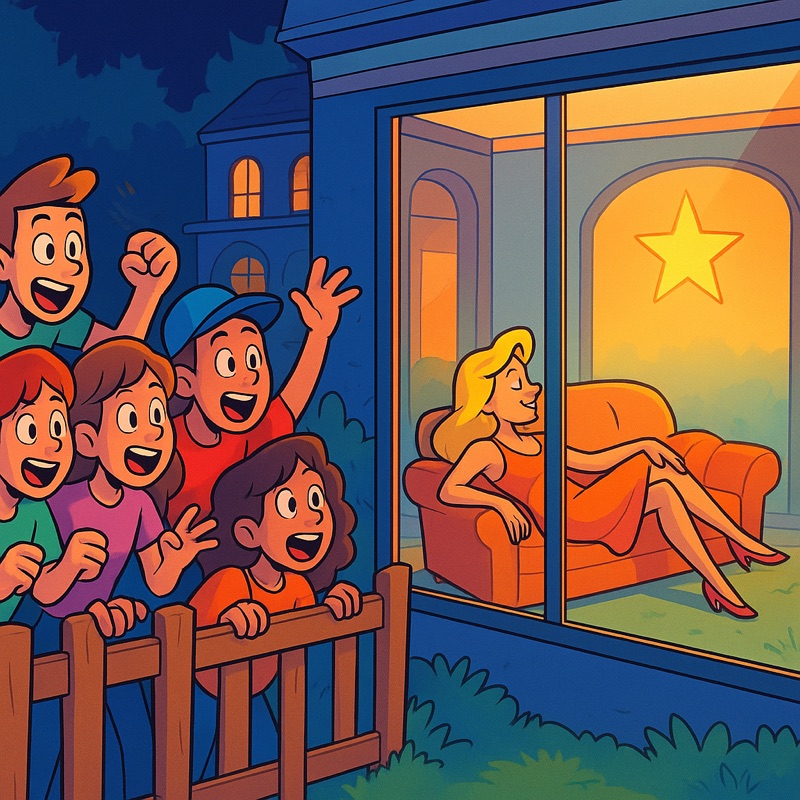
Fans lean over the garden fence and stare across the lawn, straight through the big glass window of the mansion.
The gender system
Every German noun is der, die or das, and there is rarely any logic to which. Tisch, Gabel, Messer. Table, fork, knife. Three genders, no pattern. The usual advice is to memorise the article with every single word.
Instead, the same three characters appear in every scene. Learn them once and you never memorise an article again.
Sounds like deer. A deer in the scene means der.
Die rhymes with bee. A bee in the scene means that the article is die.
Das the glass. Glass in the scene means das.
The glass window in the Fenster example above is not scenery. That is how you already knew it was das, without trying.
Where to start
Vocabild opens with a curated core drawn from the Goethe A1 and A2 lists, chosen for how often they turn up in real sentences rather than how easy they are to illustrate. Every one arrives with its keyword, its scene and its character already made.
Searching and reading mnemonics is free. A free account can save 10 words; Pro is $5.99 per month for unlimited saves and higher generation allowances. After the starter set you add what you need — paste a word, get a mnemonic back.